Founders plan launches, fundraisers and marketing around one question: how long will the app take? Agency answers range from "six weeks" to "nine months," and both can be honest, because they are describing different apps. This guide gives you realistic 2026 timelines by app type, phase by phase, and the factors that stretch or shrink them, so you can plan around a number you can trust.
Typical timelines by app type
A focused MVP, one core journey, standard design, cross-platform build, usually takes 8 to 12 weeks from kickoff to store launch. A mid-level business app, with accounts, payments, integrations and custom design, typically runs 3 to 5 months. A complex platform, real-time features, advanced AI, multiple user types or regulated-industry requirements, runs 6 to 9 months or more. If someone promises a mid-level app in four weeks, they are either descoping silently or planning to disappoint you slowly.
Where the time actually goes
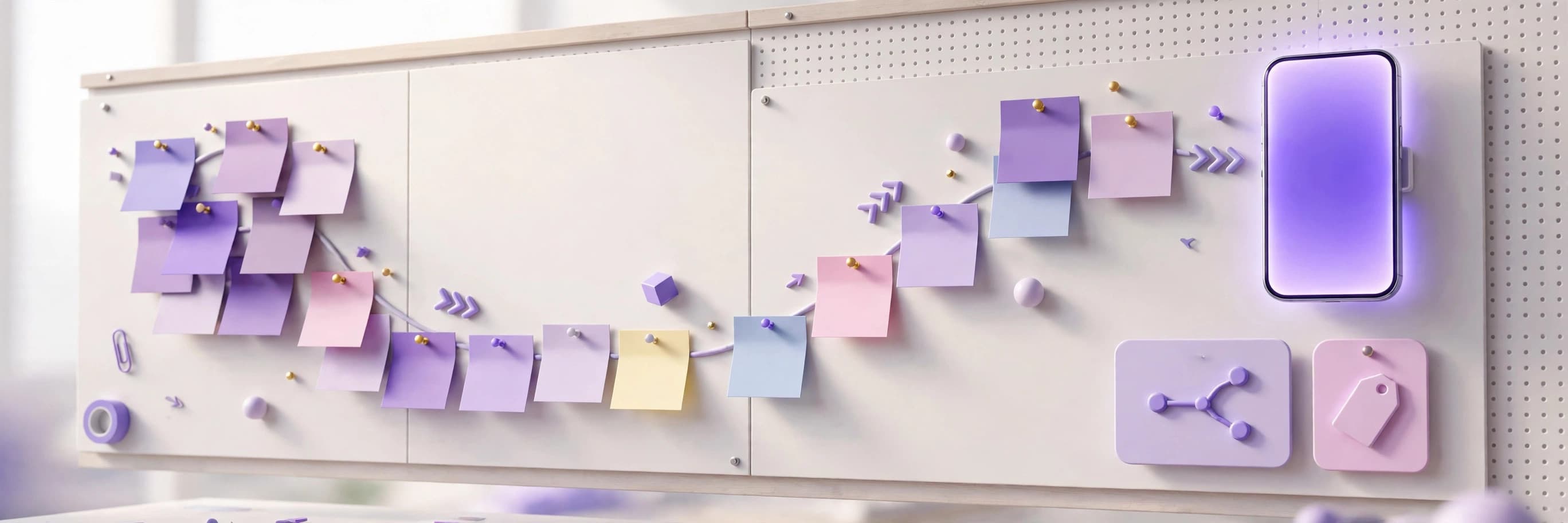
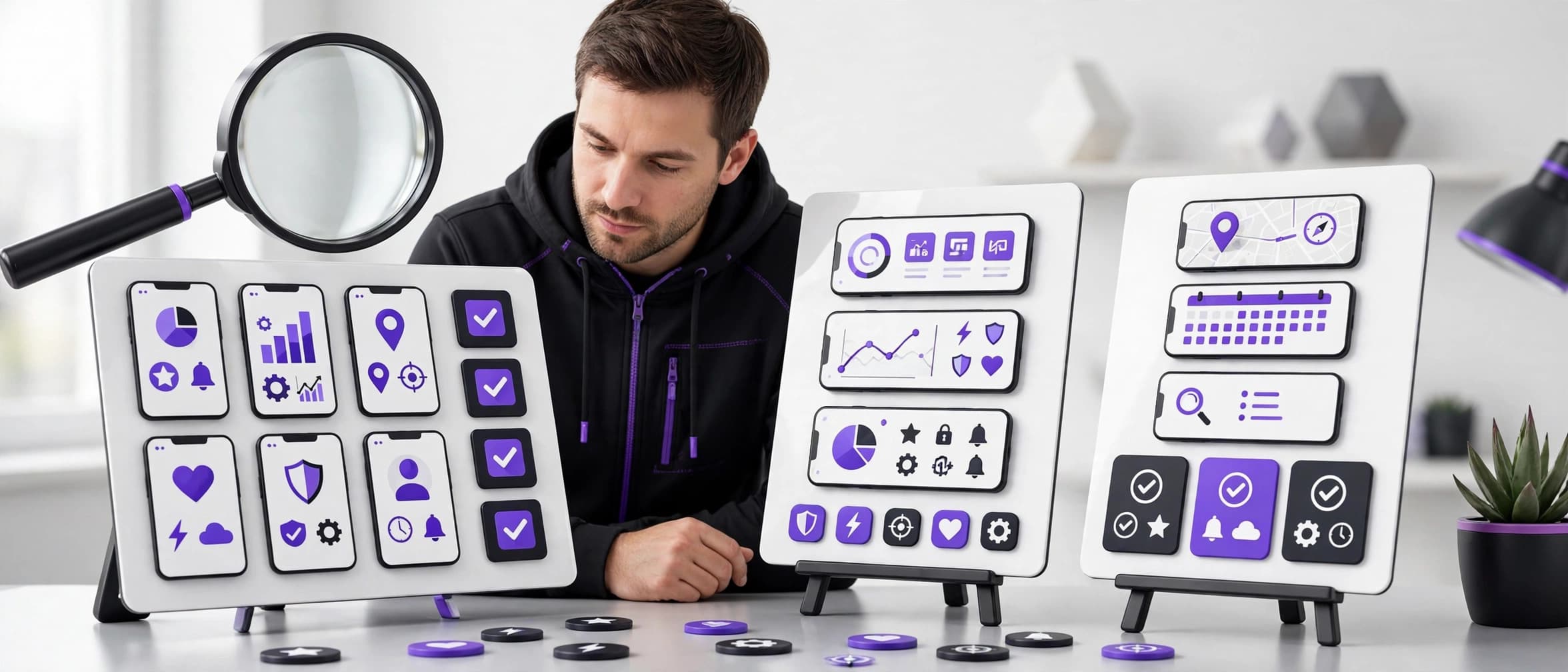
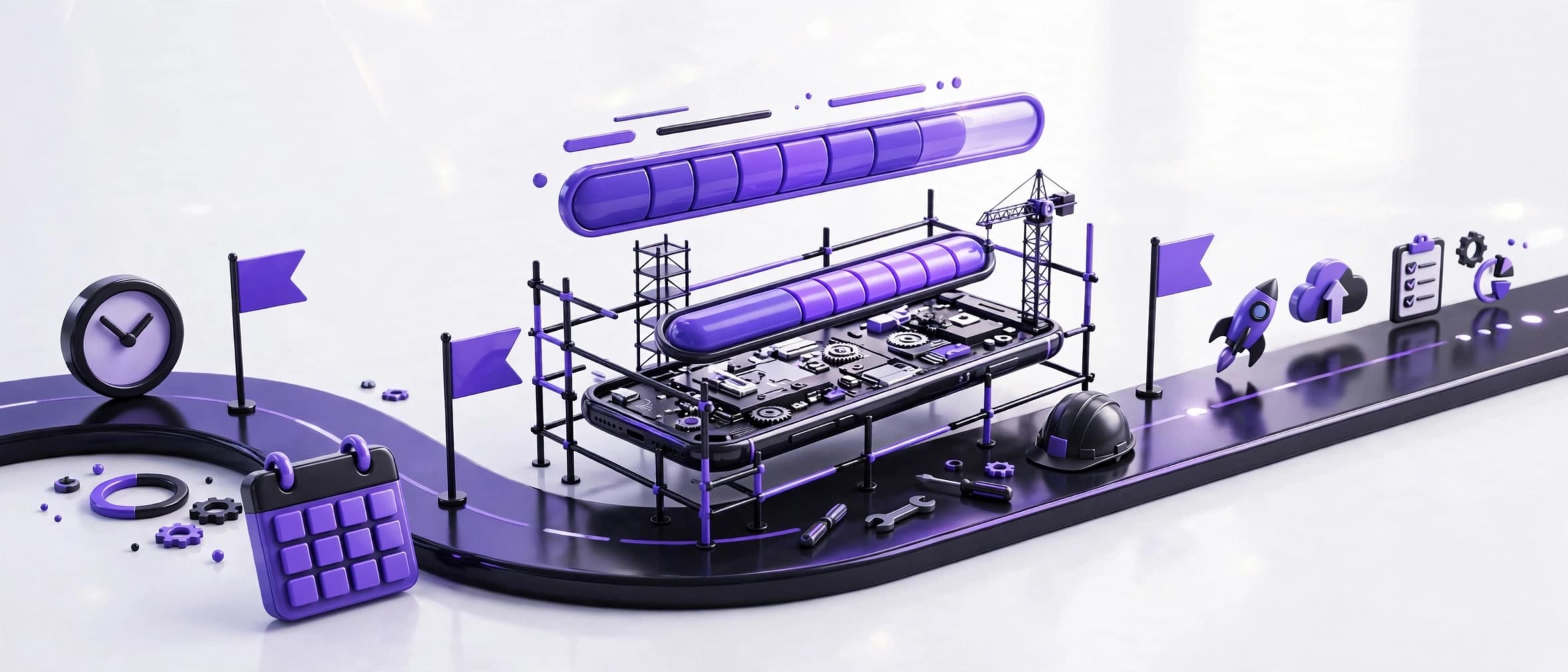
Discovery and design take the first 2 to 4 weeks: scoping, user flows, wireframes and full visual design. Skipping this phase does not save time; it moves the same decisions into development, where each change costs ten times more. Development is the longest block, usually 50 to 60 percent of the total timeline, run in sprints with working software shown every one to two weeks. Testing and fixes take 2 to 3 weeks at the end, more if the app supports many devices. Store review adds 1 to 2 weeks of calendar time that nobody fully controls: Apple and Google review on their own schedules, and a first submission is sometimes rejected for fixable reasons. Our MVP guide walks through the lean version of this same sequence.
The five factors that stretch a timeline
- 1**Scope changes mid-build.** Every added feature displaces time. A disciplined change process, new ideas go to the version-two list unless they displace something, is the single strongest timeline protector there is.
- 1**Slow feedback.** A team waiting three days for design approval, five times, has added two weeks without writing a line of code. Founders who review within a day keep projects visibly faster.
- 1**Third-party dependencies.** Payment providers, legacy systems, partner APIs and content from your side all carry their own queues. Identifying them in week one, as a proper discovery phase does, prevents the classic month-five surprise.
- 1**Platform choice.** Building iOS and Android separately roughly doubles front-end time. A cross-platform build with Flutter or React Native is the main reason modern timelines are shorter than they were five years ago.
- 1**Compliance and content.** Regulated industries add review and documentation steps, and apps that launch empty because content was not ready have confused a content delay with a development delay since forever. Start content in parallel, not at the end.
How to make your app faster without making it worse
Shrink the first release, not the quality bar: launch the core journey polished instead of ten journeys rough. Decide the platform strategy once, early, with your actual audience data. Assign one decision-maker on your side who can approve within a day. Reuse proven services for payments, authentication and messaging instead of building them. And keep the team stable; swapping designers or developers mid-project always costs more time than it saves money. These are the habits built into our mobile app development process, and they are boring, which is exactly why they work.
A realistic sample schedule
For a typical startup MVP: week 1, scoping and user flows. Weeks 2 to 3, design. Weeks 4 to 9, development in three sprints with demos. Weeks 10 to 11, testing and fixes. Week 12, store submission and launch. Twelve weeks from decision to real users, assuming feedback arrives on time and the scope holds. If your plan needs a date for investors or a launch event, add a two-week buffer and announce the internal date, not the hopeful one. If you would rather have a team run those twelve weeks for you, our MVP development for startups follows this same sequence, with demos every week.