
Strategy & Branding
Product discoverysprint
A short, fixed-price engagement that turns your idea into a clear plan: scope, design direction, a clickable prototype, timeline and cost, before you commit to a full build.
Clarity first. Commitment after.
The most expensive way to build a product is to start building before you know exactly what you are building. A discovery sprint replaces months of guessing with a few focused weeks: we validate the idea, define the smallest scope that tests it, and design a clickable prototype you can put in front of real users and investors.
You finish the sprint with documents and designs you own: a feature scope with priorities, a product roadmap, a prototype, and a fixed estimate for the build with a realistic timeline. Founders use the output to raise money, align partners and make a calm build decision, with us or with another team.
It is the same first phase we run before our own MVP and app builds, offered on its own because it is valuable on its own.
What's included
- Idea validation and competitor review
- Feature scope with clear priorities
- User journey and product roadmap
- Clickable prototype of the core experience
- Technical approach and stack recommendation
- Fixed build estimate and timeline
- A walkthrough session with your team or investors
- 01
Scope you can defend
Every feature is challenged: does it test the core idea, or is it decoration? The scope that survives is small enough to build fast and complete enough to learn from, with the rest honestly parked in a roadmap.
- Core problem and target user, agreed in writing
- Must-have versus later, decided together
- Risks and unknowns named early
- 02
A prototype people can react to
Opinions about an idea are cheap; reactions to a prototype are data. We design the core flows as a clickable prototype and, where useful, test it with people from your target audience during the sprint.
- Key screens and flows in Figma
- Clickable and shareable with stakeholders
- Feedback folded into the final scope
- 03
Numbers you can plan with
The sprint ends with a fixed estimate and timeline for the build, based on the agreed scope and prototype, not on a sales conversation. If the numbers do not work, you learn that now, for the price of a sprint.
- Fixed build estimate, itemized
- Realistic timeline with milestones
- Options to reduce scope and cost, shown openly
How it works
- 1
Kickoff workshop
Your idea, users, business goals and constraints, captured in one focused session.
- 2
Scope and journeys
Feature priorities and user journeys drafted and agreed with you.
- 3
Prototype
The core experience designed as a clickable prototype and reviewed together.
- 4
Plan and estimate
Roadmap, technical approach, timeline and fixed build estimate, presented with all your questions answered.
Benefits ofworking with us
Works across time zones
Wherever you are in the world, we keep communication clear and simple. Our processes are organized, so time differences never slow your project down.
No shortcuts
We build products exactly as they were designed. We do not cut corners, skip testing or hide problems from you.
Flexible work terms
We offer fixed-price and hourly models. We agree on the terms that best match your budget, timeline and project needs.
Full range of services
From logo design and UI/UX to web and mobile development, marketing and client growth, you get one team that supports your whole journey.
Proof
From plan to product
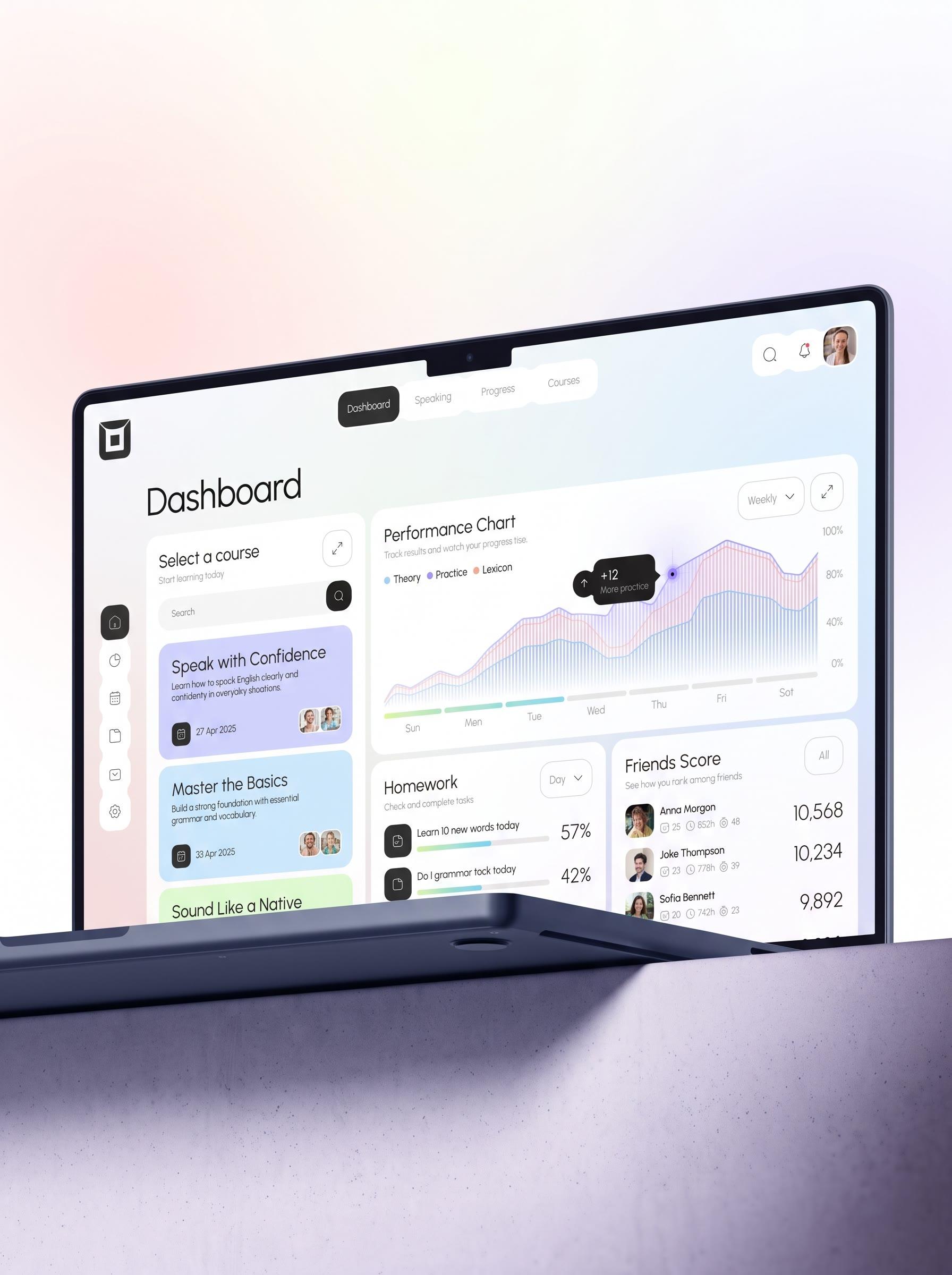
EduNova is an interactive EdTech web app we designed and built, with structured course progression flows that started as a scoped plan and prototype. Browse more planned-and-built products in the portfolio.
Questions, answered
How long does a discovery sprint take?
Most sprints run 2 to 3 weeks, depending on the size of the idea and how quickly you can review with us. The schedule is agreed at kickoff and the output date is fixed.
What exactly do I own at the end?
Everything: the scope document, roadmap, prototype files and the build estimate. They are yours to use with us, with another team, or with investors.
Is the sprint price separate from the build?
Yes, it is a fixed-price engagement on its own. If you go ahead and build with us, the sprint work carries straight into the project, so none of it is paid for twice.
I already have designs. Do I still need discovery?
Possibly a shorter version. If your scope, user flows and technical approach are already solid, we will say so and quote the build directly. Discovery exists for the gaps, not as a ritual.
Can the sprint help me raise funding?
Investors back clarity. A prototype plus a costed, realistic plan is far more convincing than an idea described in words, and founders regularly use sprint outputs in their decks and conversations.
Related services
- Websites & Platforms
MVP Development
The natural next step: your validated scope, built as a focused first version in weeks.
Read more - Strategy & Branding
UI/UX & Graphic Design
The prototype grows into a full design system and finished product design.
Read more - Strategy & Branding
Consulting & Client Growth
Ongoing product and growth advice after the plan, from the team that wrote it.
Read more
Related reading: Fixed price or hourly: choosing the right project model
Plan it beforeyou build it
Tell us your idea in a few lines. We will reply with how a sprint would run for your product.